
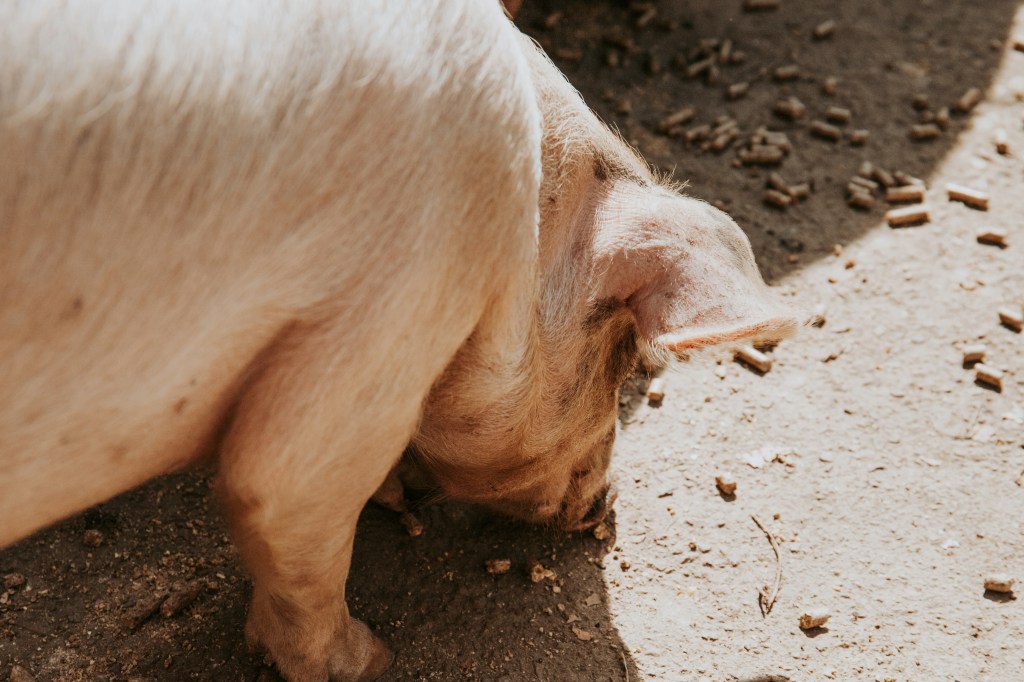
Heart palpitations in humans, collapsing “downer” pigs, and international restrictions on importing U.S. pork should’ve been enough to get the meat-industry drug known as ractopamine out of our food supply. However, in a case that epitomizes our nation’s hands-off approach to food regulation, ractopamine is legal in the United States and fed to the majority of U.S. pigs.
Ractopamine belongs to a class of drugs known as “beta-agonists” that were originally developed to treat asthma but were converted for use as livestock feed additives due to their ability to rapidly increase animal growth rates. Pigs and other animals fed ractopamine gain more muscle mass on less feed.
As alluded to in the first paragraph, there are three major risks and pitfalls presented by ractopamine’s use in pork production. The first pitfall is its potential for human exposure, and the resulting health risks. The primary human health study for ractopamine use involved six young, healthy men (an extremely small and unrepresentative sample). In the study, three of the six subjects experienced heart-pounding, and one subject even dropped out of the study due to the severity of his heart-racing and palpitations. Nevertheless, the FDA determined that since most of the drug exits muscle tissue before slaughter, meat from animals fed ractopamine is safe for human consumption.
About 20 percent of 240 final pork products tested in the U.S. had residues of the drug. U.N. food-safety body Codex Alimentarius, after extensive U.S. lobbying and a 69-67 vote on whether ractopamine residue should be permitted in any quantity whatsoever, finally recommended a ractopamine residue limit of 10 parts per billion in beef and pork. The U.S. limit in pork? 50 parts per billion.
The second major pitfall is ractopamine’s effects on pigs. As of 2018, the drug had been linked to nearly 250,000 adverse health events in pigs, including trembling, sickness, death, and “downer pig syndrome”—when a pig becomes so injured or unwell that it collapses and can no longer walk. No other livestock drug has been associated with more reports of sick or dead pigs.
After originally approving ractopamine without reservations, the FDA later required ractopamine-based drug manufacturers to add a warning label stating that “Ractopamine may increase the number of injured and/or fatigued pigs during marketing.” While this is better than no warning at all, this warning has not led to ractopamine being phased out of pork production, given that it is still fed to most U.S. pigs. Additionally, the environmental effects of ractopamine entering the environment from livestock waste are still unknown.
The third pitfall of ractopamine use is economic. Because pork from pigs fed ractopamine is banned in China, all countries in the European Union, and most other countries, U.S. pork is often excluded or disadvantaged in many international markets. This issue has been a subject of lobbying and controversy in international trade negotiations.
The FDA refuses to change their stance on this issue because there is not enough data to prove that ractopamine residue in pork is harmful to human health, and its use makes pork cheaper to produce, albeit at a painful cost to the pigs. However, as most food safety agencies around the world would agree, there is significant reason to doubt the drug’s safety, and it has not been sufficiently proven safe. Allowing ractopamine means gambling with Americans’ health, adding to the long list of potentially dangerous chemicals in our food supply.
While the FDA has not budged on ractopamine, there has been some change on the industry side. Two major U.S. pork producers recently stopped using ractopamine on their pigs, presumably in order to sell more pork internationally. Prior to this change, they had two separate pork production lines: one for us American consumers, where ractopamine use was allowed, and one for consumers in other countries, without ractopamine.
To that, I say: I’ll have what they’re having.
References:
Hein, T. (2021, April 30). JBS USA and Tyson Stop using ractopamine. Pig Progress.

 I'll Have What They're Having
Leave a comment