
Let’s be honest—sweet things taste good. Really good. In fact, we’re biologically programmed to love the taste of sweet things, since sugars are full of easy-to-access, quick energy.
Unfortunately, science has shown consistently that excessive consumption of sugar, especially added sugar, is very harmful to our health, leading to issues like obesity, type 2 diabetes, tooth decay, heart disease, inflammation, and gut microbiome imbalance. Most people in the world, especially in America, consume too much added sugar and would be better off consuming less.
But people in different countries consume different kinds of sugar, and not all kinds are alike. Some sweeteners, like honey, may be less harmful for one’s health than others, like high-fructose corn syrup (HFCS).
On my previous trip to Greece, I noticed the Greeks’ affinity for honey while driving rental cars through the mainland and the islands of Naxos and Crete. Traveling between villages, I frequently drove past roadside stands selling local honeys in a variety of flavors. I also noticed that many sweet dishes in restaurants I ate at were sweetened with honey rather than table sugar or other sweeteners. I eventually bought a jar of honey to take home from a stand near Falasarna Beach, Crete, and it was incredible – even just a few drops of it would make foods taste sweet and flavorful.
Living in the United States, I find it much less common to see honey used in restaurant cooking or sold anywhere outside of grocery stores. Most processed supermarket foods and drinks use high-fructose corn syrup as their main sweetener, and many restaurants do as well, even for some dishes that you wouldn’t expect to have any sugar at all. When HFCS isn’t used, other types of refined sugar typically take its place.
As it turns out, Greece is a world leader in honey consumption, and the United States is a world leader in high-fructose corn syrup consumption. In this article, I’ll compare the two sweeteners and the policies fueling their popularity.
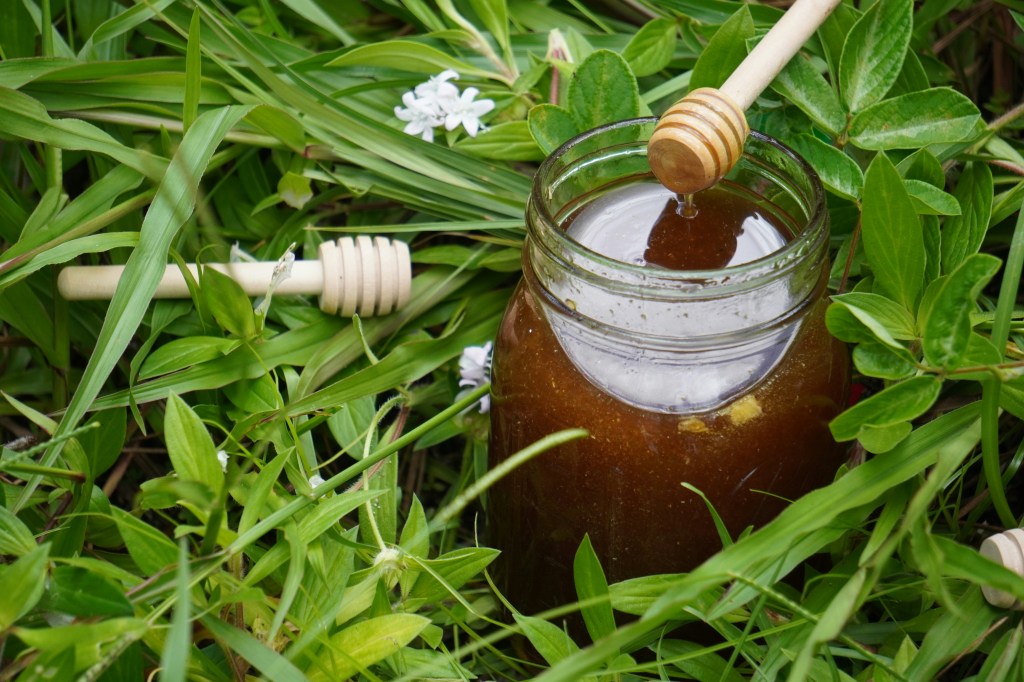
Honey is a natural, unprocessed sweetener made by bees and harvested by beekeepers. While it still carries the negative health effects of simple sugars in general, it also carries some benefits due to containing vitamins, minerals, and antioxidants, including anti-inflammatory flavonoids. Honey can also be used to ease cold symptoms like coughs and sore throats, and it has some antimicrobial properties. Raw, locally-produced honey can even be used to help combat seasonal allergies, since it contains pollen from nearby flora.
Another key benefit of honey is that its strong flavor allows it to be used in smaller quantities than other sugars without compromising sweetness. Generally, the less added sugar one consumes, the better.
High-fructose corn syrup (HFCS), on the other hand, is an ultra-processed sweetener tied to a variety of health issues beyond those caused by other forms of sugar. HFCS is made by applying enzymes to corn syrup, which converts the glucose sugar molecules into a different type of sugar molecule called fructose.
Unlike other sugar molecules such as sucrose (table sugar) or glucose, fructose is able to “skip” the body’s metabolic breakdown mechanism and travel straight to the liver, in a process known as “metabolic shunting.” This process has been identified as a likely cause of insulin resistance and hyperlipidemia, a condition where there are excess fats in the blood. As a result, excessive fructose consumption from sources like HFCS significantly increases one’s likelihood of developing type 2 diabetes, cardiovascular disease, fatty liver diseases, and more. One USC-Oxford study demonstrated that, even when controlling for total sugar consumption, obesity rates, and socioeconomic factors, countries that frequently use HFCS as a sweetener had a 20 percent higher rate of type 2 diabetes than those that do not. Thus, there is convincing evidence that HFCS is in fact worse for human health than many other kinds of sweeteners.
While Greece consumes less than 1.1 pounds (0.5 kg) per capita of HFCS per year, Greece’s honey consumption was ~5.49 pounds (2.49 kg) of honey per capita in 2023, the second highest rate in the world. The United States, on the other hand, leads the world in HFCS consumption, with an appalling per-capita consumption of 55 pounds (~25 kg) of high-fructose corn syrup per year, while only consuming 1.3 pounds (~0.59 kg) per capita of honey.
While culture and personal taste certainly play a role in the relative consumption of these sweeteners, policy has an important impact as well.
First of all, Greece strongly supports beekeepers through its participation in the European Union’s common agricultural policy (CAP). Greece’s national apiculture programme, which is co-funded by the E.U., allocates millions of euros annually towards providing technical assistance, disease mitigation, research support, bee breeding, marketing support, quality enhancement, and more for beekeepers. The E.U. also takes steps to ensure honey quality, such as testing for adulteration and hosting the Honey Platform expert group dedicated to authenticity and quality controls for honey.
On the other hand, the U.S. supports corn far more than any other agricultural product, providing over $116 billion in subsidies to corn producers from 1995 to 2020 – far more than all subsidies to the farmers of fruits, vegetables, tree nuts, herbs, spices, nursery plants, and honey combined. Corn is primarily used to make ultra-processed foods (including HFCS), feed for factory-farmed animals, and biofuel. By encouraging corn production, making corn and its derivatives cheaper through subsidies, and providing no incentives to limit HFCS usage, the U.S. has made HFCS the most cheap and profitable sweetener for food companies.
Given the health effects of honey versus HFCS, this reality bodes poorly for the United States, especially when it comes to type 2 diabetes.
Is honey a “healthy” food that we should be eating a ton of? No—sugar is still sugar.
But is it significantly less unhealthy for us than high-fructose corn syrup, which Americans eat 6.6 million tons of annually? Probably.
So, would we be a healthier country if we sweetened a bit more like Greece? To that, I can confidently say “yes.”
References:
Congressional Research Service. (2019, January 14). Federal Crop Insurance: Specialty Crops.
Dietary Sugar Consumption and Health: Umbrella Review. BMJ.
European Commission. National Apiculture Programmes. Agriculture and rural development.
Honey consumption by country. Live Beekeeping. (2025, January 10).
Shahbandeh, M. (2024, November 28). Per capita consumption of pure honey in the U.S. 2023. Statista.
Whelan, C. (2023, May 19). Which is better, honey or sugar? Healthline.
 I'll Have What They're Having
Leave a comment