
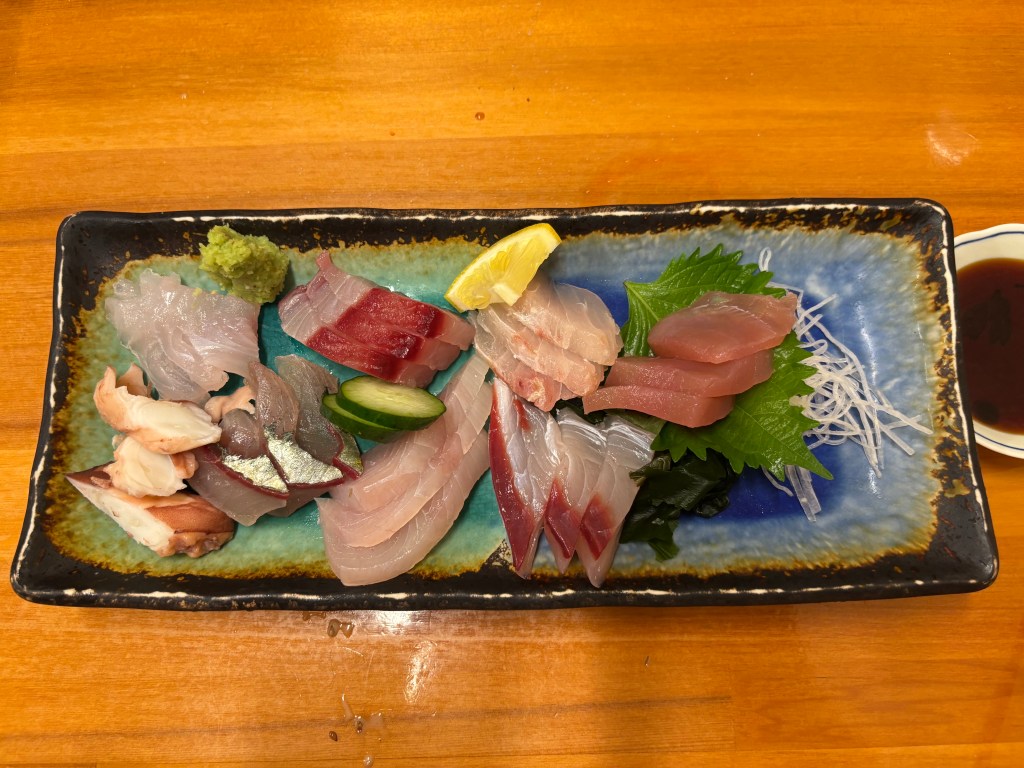
I traveled to Okinawa, Japan, one of the world’s five official “Blue Zones” known for the exceptional health and longevity of their inhabitants.
In Okinawa, rates of ailments like cancer, heart disease, and dementia are far lower than global averages. Many centenarians (people older than 100) live in Okinawa, and despite their age they are often seen gardening, walking, and taking part in community life.
So why are Okinawans so healthy, and what can we learn from them?
To get right to the point: There are many factors contributing to the health and longevity of Okinawans, including strong community ties, a diet based on whole plant foods, frequent exercise, and the Okinawan principle of ikigai, or purpose-driven living.
In this article, however, I will discuss one factor I got to experience firsthand during my visit—the value Okinawans place on freshness in their food.
Upon arriving in Okinawa, one of the first things I had on my agenda was to visit a local grocery store. I wanted to see which types of foods Okinawans were eating in their everyday lives. So, the evening after getting to my stay in the town of Yomitan, I ordered a taxi to the town’s main grocery store.
The first few sections of the store that I explored provided an interesting window into Okinawan eating habits. In the produce section, I found dozens of locally-grown and seasonal varieties of fruits and vegetables, including plenty of goya, or bitter melon, a staple ingredient in Okinawan cuisine. Rather than being stocked full, many of the fruits and vegetables were nearly sold out, suggesting that the products sell fast and are replaced daily. There were multiple aisles full of different types of noodles and rice, as well as aisles of pastes like dashi and miso. The protein section, rather than being dominated by meat like in most U.S. grocery stores, was also full of varied seafood options being sold for cheap. According to the packaging, much of the fish being sold could be eaten raw, sashimi style—a testament to the freshness and quality of the fish.
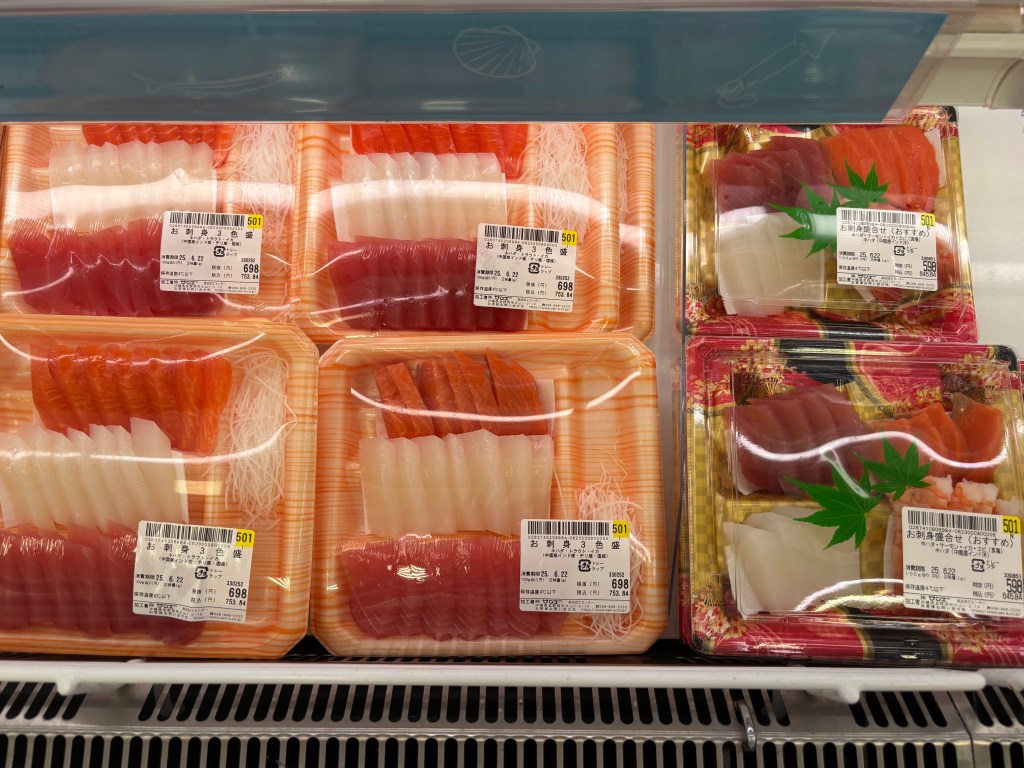
(above) Sashimi-grade fish being sold for about USD $4.50 in the grocery store
Nevertheless, the part of the store that surprised me the most was the prepared meal section.
Most U.S. supermarkets have these sections, offering room-temperature, ready-to-eat meals like mac-and-cheese, sandwiches, chicken fingers, and sometimes even sushi rolls. These meals typically last for several days without spoiling, and they usually have extensive ingredients lists full of additives.
The prepared meal section in this Okinawan grocery store offered plenty of typical Japanese dishes—udon, grilled fish, katsu, nigiri, and more, served in bento boxes with sides like vegetables, eggs, and rice. The boxes were prepared in the store’s kitchen, which was in full view right behind the aisle. Just like in the produce section, prices here were low and most boxes were already sold out for the day.
Looking at the boxes, the ingredients lists (which I translated using my phone) were much more natural and short than I was accustomed to, and the food looked delicious. I decided that I would buy a few to take to my hotel for the week.
However, upon looking at the expiration dates—which were specified down to the exact hour—I was surprised to see that every single meal I wanted to buy would expire either later that very night or the following morning. The packaging also specified when each meal was made; all of them had been made earlier that same day. One of the meals I wanted, a bento box with grilled mackerel, had a total shelf life of less than 12 hours.
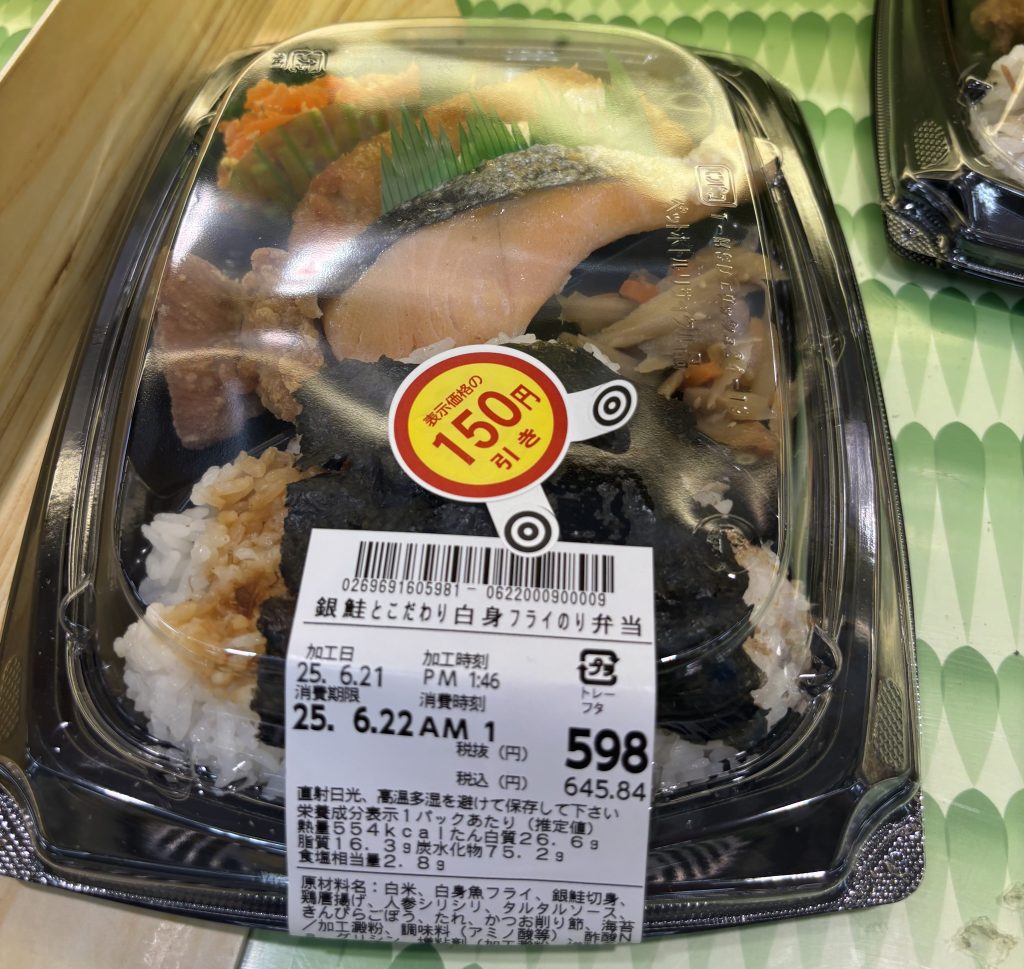
(above) The grilled mackerel bento box; the upper date and time shows when the meal was prepared (1:46pm that day) and the lower date and time shows when the meal expires (1:00am that night)
I was sure I was misunderstanding things; after all, the prepared meals I’d bought before in American grocery stores almost always had several days’ worth of shelf life. I asked a worker if I actually needed to follow these expiration dates closely. He said “yes,” then rubbed his belly to convey that I would get sick if I didn’t.
While I was disappointed that I couldn’t stock up on food, I realized that this was simply the result of a different, healthier business model. Rather than selling processed, facility-made foods full of additives, this grocery store was selling real food cooked in-house daily from fresh ingredients, without relying on preservatives.
Instead of stocking up for days in advance with an excess of longer-lasting but lower-quality food, the store would produce just enough meals for each day then replace them the next day with fresh ones. While I would consider most prepared meals in U.S. grocery stores to be little better than ultra-processed junk food, many consumers in Okinawa can expect nutritious, unprocessed, and fresh meals from their grocery stores.
I noticed a similar pattern while eating at izakayas (restaurants serving small plates and drinks) around Okinawa. Much to my dismay, the izakayas I ate at were usually already sold out of several dishes for the day by the time I’d arrive for dinner. However, the dishes that they did have in stock tasted remarkably fresh. Many restaurants served fish caught earlier that same day or the night before. As I gathered from talking to servers, many restaurants in Okinawa replenish their ingredients daily to ensure freshness and flavor, instead of using preservatives and artificial additives.
This rarely happens in the U.S., where most restaurants stock up on ingredients days or weeks in advance, frequently processed with additives that alter their taste, texture, and shelf-life. When low-quality, non-fresh ingredients are used, restaurants often compensate for inferior flavor by adding excessive amounts of fat, sugar, and salt to their foods. As a result, the majority of restaurant food in the U.S. is loaded with unhealthy ingredients, and much of it can be considered ultra-processed.
Okinawa’s emphasis on fresh food likely plays a role in their superior health. While ultra-processed foods make up nearly 60% of all calories consumed in the United States, whole plant foods like vegetables, beans, and legumes make up 90% of the traditional Okinawan diet. These nutritious foods are often sourced locally, ensuring good quality and flavor without having to rely on preservatives and other additives.
Overwhelming scientific evidence points to the nutritional superiority of a diet based on unprocessed ingredients and high in plant foods. From increasing life expectancy to reducing risk of chronic disease and obesity to improving mental health, the benefits of such a diet for one’s health and wellbeing are many. While not everyone in Okinawa adheres to the traditional diet, the region’s emphasis on consuming fresh whole foods is undeniable and likely supports its excellent public health.
The Okinawan food system’s lower usage of preservatives relative to the U.S. likely benefits public health directly. Many kinds of preservatives are tied to harmful health effects, yet preservatives are added to the vast majority of U.S. foods to extend shelf life. Some of the preservatives most commonly used in the U.S. are even restricted in other countries. There are many examples of preservatives that should likely not be in people’s food but are allowed in the U.S. food supply due to the FDA’s lax Generally Recognized as Safe (GRAS) system.
For instance, BHA and BHT, GRAS preservatives that are restricted in Japan but common in the U.S., are suspected of being linked to cancer, organ damage, and hormone disruption. Carrageenan, another GRAS preservative, is tied to gut microbiome damage and systemic inflammation. Nitrites, which are frequently used to preserve processed meats, can turn into carcinogenic nitrosamines when cooked at high heat.
Plenty of other examples exist of unhealthy preservatives that are widely used in the U.S. but uncommon in places like Okinawa. With the help of the United States’ loose additive regulations and high consumption of ultra-processed foods, North America leads the world in preservatives consumption with a global market share of 34.3%, despite being home to less than 8% of the global population.
Food laws play a critical part in their lower prevalence of unsafe additives in Okinawa. Japan’s Food Sanitation Act (FSA) of 1947 forms the basis of the Japanese food regulation system. Under this law, additives must be scientifically evaluated by the Ministry of Health, Labour, and Welfare (MHLW) before being approved for use in food.
Unlike the United States’ GRAS system, which allows companies to use additives that have not been tested or even examined by the government or a third party, Japan’s FSA system ensures that additives cannot enter the food supply without their safety being rigorously studied. Over 10,000 additives are estimated to be in use in the U.S. food supply, thousands of which circumvented evaluation thanks to the GRAS loophole. On the other hand, Japan has only approved about 476 additives since the FSA was introduced, in addition to the 357 additives that were widely used and known to be safe before the law was passed.
Thus, the combination of stricter food additive laws and a freshness-forward food culture helps to create a food system in Okinawa that is among the healthiest in the world.
My visit allowed me to experience a piece of Okinawa’s lifestyle wisdom through food. Yet, while my stay was brief, I am certain that Okinawa has many more valuable lessons to offer on health and longevity.

(above) My visit to the Yachimun no Sato pottery village in Yomitan, Okinawa
References:
FDA. (2023, October 17). Generally recognized as safe (GRAS). U.S. Food and Drug Administration.
Food Preservatives Market. Market.us. (2025, June 24).
Imatome-Yun, N. (2021, April 30). The Okinawa Diet: Eating and living to 100. Blue Zones.
List of Designated Additives. The Japan Food Chemical Research Foundation. (2024, March 1).

 I'll Have What They're Having
Leave a comment