
You’ve probably heard the following statements before:
“You need to eat lots of protein!”
“Protein makes you strong!”
“Protein is super healthy for you!”
Well—these statements aren’t wrong.
Protein is essential in your diet, it is necessary for building muscle, and it is in itself a very healthy macronutrient.
However, not all protein-dense foods are equal. Some are so unhealthy that they are best avoided entirely, while others are among the healthiest foods available. Unfortunately, Americans consume far too much of the worst options and not nearly enough of the best options—and our government policies help maintain this imbalance.
In this article, I will be discussing the main categories of protein-dense foods, from healthiest to least healthy. I will compare their nutritional benefits, their prevalence in the American diet, and the ways they are shaped by food policies. While I am not a dietitian, you can be assured that all of the claims I make about these foods’ healthfulness are supported by reputable scientific studies and trusted sources such as the National Cancer Institute, Stanford Medicine, and Harvard’s The Nutrition Source.
The healthiest group of protein-dense foods—the kinds we should eating the most—is minimally-processed plant-based protein sources such as beans, nuts, and tofu. In addition to being high in protein, these foods are strongly associated with a variety of health benefits and come with little to no drawbacks.
Beans, for example, are among the healthiest foods in existence: they are full of fiber, protein, antioxidants, and valuable micronutrients like potassium. Beans are nutritionally dense and satiating, and they have been consistently linked to benefits such as weight management, lower blood sugar, lower cholesterol levels, and reduced risks of certain cancers. People in the world’s “Blue Zones”—regions with the highest life expectancies and lowest rates of chronic disease—tend to consume about a cup of beans per day.
Nuts, likewise, are full of fiber, protein, heart-healthy fats, and micronutrients. Although they are calorie-dense, they are also very satiating, and diets rich in nuts are associated with reduced risks of inflammation, high blood pressure, and heart disease. In their unprocessed forms, nuts make a very nutritious snack.
Soy-based proteins like tofu and tempeh can also be a nutritious source of complete protein. Soy is rich in isoflavones, which have been linked to reduced cancer risk, improved cognitive function, and other health benefits. While soy foods tend to be more processed than beans and nuts and contain less fiber, they provide all nine essential amino acids and lack many of the health drawbacks of animal-based proteins.
Most Americans, unfortunately, do not consume the recommended amounts of plant-based protein foods. Part of this may have to do with federal farm policy: while the USDA provides billions of dollars in subsidies for commodity grains that primarily go toward livestock feed, it provides far less support toward “specialty crops” like beans and nuts. This imbalance affects relative prices in favor of animal-based foods. Even the USDA Dietary Guidelines reflect this bias—in the “proteins” section, beans, nuts, and soy products are listed last, while meat and poultry are listed first.
The second healthiest group of protein-dense foods is seafood, particularly fish. Higher fish consumption is linked to better cardiovascular, brain, and liver health as well as lower levels of oxidative stress. In addition to being dense in nutrients and complete protein, fish—particularly fatty fish like salmon—are some of the best dietary sources of omega-3 polyunsaturated fats. Omega-3 fats, which most Americans are deficient in, are very beneficial to one’s health: they have been shown to lower the risks of heart disease, cognitive decline, and certain cancers, reduce inflammation, and even help with conditions such as depression.
The main drawback of seafood consumption is mercury exposure, but this is mostly limited to large, predatory species like swordfish. For most people, eating moderate amounts of the right fish carries little to no risk. In fact, the numerous health benefits associated with fish consumption are evident even at just two servings per week, yet 90% of Americans fail to consume even this much.
The third category we’ll discuss is eggs. Eggs, when consumed in moderation, are a healthy and affordable protein source. They are low in calories, satiating, and provide healthy fats, complete protein, and beneficial nutrients such as lutein and choline. Eggs are high in cholesterol, and while they do not raise LDL levels in the blood as much as other animal foods, excessive egg consumption may be linked with an increased risk of heart failure later in life. Nevertheless, moderate intake of about seven eggs per week (or one egg per day) is not associated with a greater risk of heart disease. Thus, in moderation, eggs can be a healthy protein source.
Next is poultry, including chicken, turkey, and duck. The healthfulness of poultry as a protein source depends greatly on the form in which it is eaten. Generally, lean, unprocessed options such as skinless chicken breast can be healthy; they are dense in complete protein and low in saturated fat. In fact, moderate consumption of lean, unprocessed poultry has been linked with neutral to beneficial effects on weight, diabetes risk, and heart disease.
However, high-fat options like chicken thighs or skin-on cuts can be full of unhealthy fats and cholesterol. Even more problematic are processed poultry foods such as fried chicken, cold cuts, and nuggets, which are often packed with harmful fats and preservatives. For example, one study found that women who ate fried chicken weekly had a 13% higher risk of dying from any cause and a 12% higher risk of dying from heart disease than those who did not eat fried chicken.
In recent years, chicken has surpassed beef as the most consumed meat in America, due in large part to its affordability. While lean poultry has some nutritional benefits, much of the poultry Americans eat is high in fat or processed, which undermines those potential advantages.
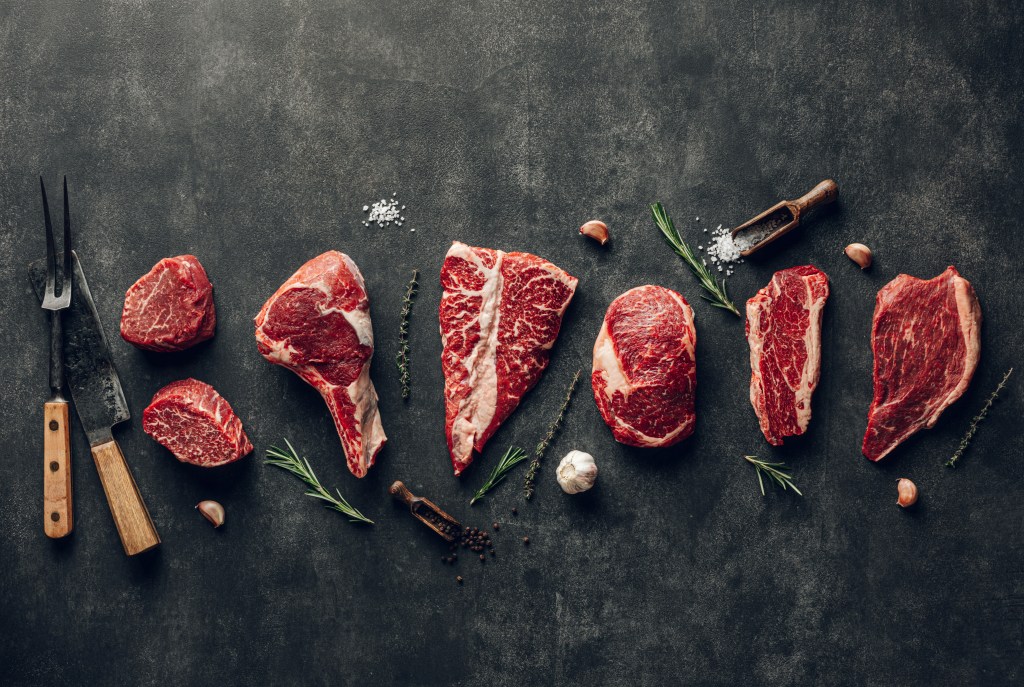
Red meat—the meat of mammals like pigs, cows, and lambs—comes next. Although red meat is high in protein and nutrients, it comes with many drawbacks and is consistently linked to health risks, even in lean or unprocessed forms. Higher intake of red meat—in any form—is strongly linked to increased risks of heart disease, type 2 diabetes, certain cancers, and premature death in general. In one study, replacing red meat with nuts and legumes lowered type 2 diabetes risk by 30%.
While a handful of highly publicized studies have questioned the negative effects of red meat, these studies have generally been identified as methodologically flawed or biased. Powerful, well-funded efforts by industry groups have helped create the impression among the public that scientific opinion on red meat is divided. Looking past the noise, however, the scientific consensus is clear: red meat consumption is harmful to health, and Americans should consume far less than they do currently.
Nevertheless, red meat continues to benefit from government policies that favor its production. Federal grain subsidies keep foods like beef and pork artificially cheap by lowering the price of livestock feed, and the USDA Dietary Guidelines consistently fail to highlight the negative health effects associated with these foods, presenting them instead as a main source of protein.
Finally, we arrive at the least healthy protein-dense foods: processed meats, a group nearly everyone would be better off avoiding. The term “processed meat” refers to any meat that has been transformed from its original state through curing, smoking, or the addition of preservatives—think deli meats, hot dogs, chicken nuggets, and bacon. These products are typically loaded with unhealthy fats, excess sodium, and toxic additives such as nitrates, nitrites, and sodium benzoate. When cooked at high temperatures, the preservatives in processed meats can form highly carcinogenic compounds known as nitrosamines and polycyclic aromatic hydrocarbons—the same chemicals found in cigarette smoke.
Thanks to these factors, processed meat is linked to more negative health effects than nearly any other food. One study found that consuming just 150 grams (~0.33 pounds) or more of processed meat per week was associated with a 46% higher risk of cardiovascular disease and a 50% higher risk of death from all causes. Another study concluded that consuming an average of just 25 grams (~0.05 pounds) or more per day was associated with higher rates of dementia and Alzheimer’s disease. Processed meat consumption is also linked to increased risk of type 2 diabetes. The World Health Organization has even classified processed meat as a Group 1 carcinogen, concluding that it causes colorectal cancer.
Despite the significant health risks posed by this food group, Americans eat an average of 182 to 187 grams of processed meat per week—a sizable amount. While the USDA Dietary Guidelines acknowledge that Americans should choose unprocessed meats over processed meat, they fail to clearly emphasize the message that processed meat is unhealthy, instead using vague phrases like “Vary your protein routine.”
Clearly, Americans’ protein-eating habits are far off from what they should be. We consume too little of the healthiest proteins, like beans and fatty fish, while also consuming too much of the unhealthiest, like red meat and processed meat. These habits likely have measurable negative effects on public health and life expectancy. Nevertheless, instead of addressing the problem, government policies help maintain the status quo by subsidizing livestock feed grains and giving meat an undeservedly favorable position in dietary guidance.
References:
 I'll Have What They're Having
Leave a comment