
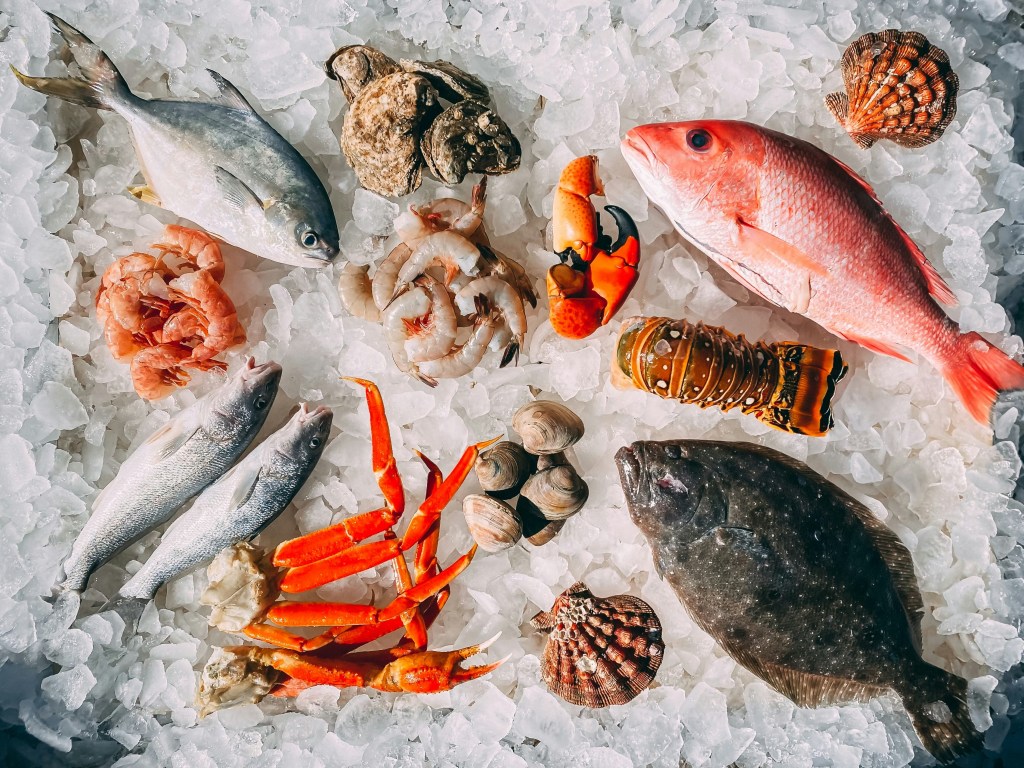
Fish, particularly fatty fish, is one of the most beneficial foods for protecting one’s health. Compared with virtually any other animal-based food, fish has the strongest positive association with chronic disease prevention and longevity when consumed regularly. Yet, while U.S. consumption of less-beneficial proteins like red meat and poultry is extremely high, most Americans do not consume nearly enough fish. In this article, we’re going to delve into why this is the case and what can be done about it.
First, it will be useful to discuss the multitude of health benefits associated with fish consumption. While different species of fish offer different nutritional profiles, fish is generally high in protein and micronutrients and low in saturated fat and cholesterol—two harmful components found in most other animal foods. Fish is also often less calorically dense than other animal foods, offering a better ratio of protein per calorie.
The greatest benefit of fish consumption, however, is specific to fatty fish: its high content of omega-3 polyunsaturated fats. Omega-3s are critical nutrients that likely play a major role in limiting inflammation, preventing heart disease, and combatting a wide range of chronic conditions—including dementia, arthritis, Alzheimer’s disease, cancer, and even depression. Most Americans do not consume nearly enough omega-3s, which may seriously contribute to the high rates of the aforementioned conditions in the U.S..
Fatty fish like salmon, herring, sardines, and anchovies are far and away the most effective dietary sources of omega-3s. As such, regular fish consumption has been repeatedly shown to protect brain health, liver health, and heart health while limiting the inflammation and oxidative stress that causes cell damage. Due to these benefits, the American Health Association recommends that consumers eat 2 servings of fatty fish per week. However, very few Americans meet these recommendations. Likewise, the U.S. Dietary Guidelines’ recommendations for 8 oz. of seafood consumption per week are not met by 90% of Americans.
The 19 pounds per capita of seafood that Americans eat per year pales in comparison to the over 150 pounds per capita of meat and poultry consumed annually. Furthermore, a quarter of that seafood consumption is shrimp, which lacks many of the benefits fish offer. Americans consume far less fish than the global average, and the difference is even more stark when compared to some of the world’s healthiest countries, like Spain, Italy, and Japan.
So, why aren’t Americans eating fish? The first reason is a cultural preference. American diets have historically revolved around land animals, and many people today dislike the taste, smell, and texture of most fish. Without frequent exposure to fish from a young age, people may find it less appealing than other protein foods and simply consume it less.
Another reason is due to fears about mercury contamination—fears that are somewhat misguided. While mercury does in fact accumulate in fish in the form of methylmercury, a toxic compound that can be harmful to pregnant women and young children, the level of contamination varies greatly by species. Top predators like swordfish, shark, and bigeye tuna accumulate the largest amount of mercury, while fish like salmon, herring, whitefish, and sardines contain only negligible trace amounts, making them safe even for the most high-risk groups. These low-mercury fish largely do not pose any risk of mercury poisoning even when consumed regularly, and their health benefits far outweigh any downside—yet public hesitancy unfortunately still exists.
While consumer preferences play a role, there are larger, more structural reasons for this situation. Cost is one major factor; chicken, beef, and pork tend to be much more affordable than fish. This is, in part, due to government intervention: by subsidizing mass production of livestock feed grains like corn, wheat, and soy, the U.S. government artificially lowers the cost of meat relative to seafood. Likewise, the U.S.’ weak regulations on livestock farming further decrease the cost of meat production at the expense of consumer health, animal welfare, and the environment.
Due in part to this economic reality, the food industry also generally makes fish much less available for consumers than other proteins. The U.S. food system is dominated by large fast-food chains, most of which have menus centered around beef, chicken, and pork. Aside from the famous Filet-o-Fish at McDonalds, fish options are often underemphasized on menus or absent entirely. Likewise, marketing campaigns are far more likely to advertise meat and poultry products—after all, they are more profitable.
Lastly, the importance of fish and omega-3 consumption is not sufficiently communicated by U.S. food and health authorities. While the FDA officially recommends Americans consume at least 8 oz. of seafood per week, the MyPlate model does not emphasize this point, nor does it emphasize the critical importance of omega-3 consumption. In fact, throughout the larger Dietary Guidelines, whenever animal proteins are listed, seafood is consistently placed last—after meat, poultry, and eggs. When fish is mentioned in government communications, it is most often in the form of a warning against excessive mercury consumption. In reality, most Americans would be far healthier substituting fatty fish for meat in their diets as often as possible.
Thus, due to a combination of cultural preferences, federal agriculture policy, and poor government communication about the benefits and risks of seafood consumption, Americans consume far too little fish and are overwhelmingly deficient in omega-3 fats. Until U.S. food policy sufficiently encourages fish consumption, many Americans will be missing out on the important and varied benefits of perhaps nature’s healthiest animal protein.
References:
Greenberg, P. (2023). Why Americans don’t eat seafood. Medium.
National Institutes of Health. (2025). Omega-3 fatty acids. Office of Dietary Supplements.
U.S. Food and Drug Administration. (2024). Advice about eating fish.
 I'll Have What They're Having
Leave a comment