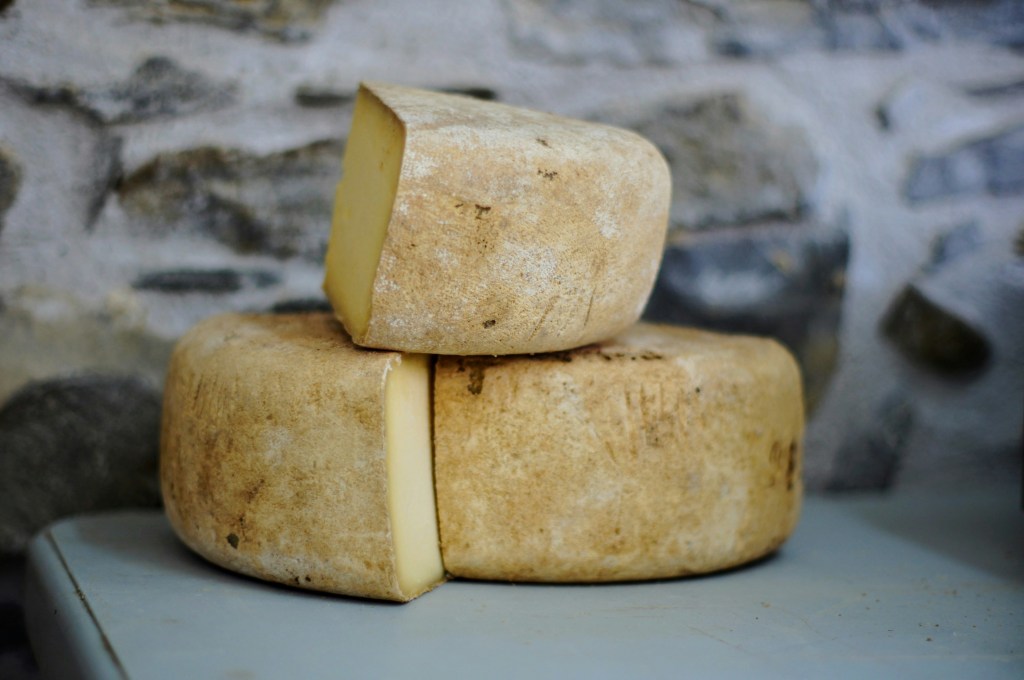
One of the greatest delights I experienced while traveling throughout Italy was the abundance of fresh parmesan cheese served with food at most restaurants. While I’ve always enjoyed parmesan cheese in the United States, true Italian parmesan—officially known as Parmigiano-Reggiano cheese—is on a different level in terms of flavor, with an intensely savory, buttery profile. Not only is Parmigiano-Reggiano delicious, but it’s also quite healthy; it contains no additives or preservatives, is dense in protein, calcium, and other nutrients, and offers benefits for the immune system, digestive system, and heart.
My experiences eating Italian parmesan left me with a few questions: Why does it taste so much better than the parmesan back home in the United States? And why was American-style parmesan nowhere to be seen in any restaurants or grocery stores—not just in Italy, but in the whole European Union?
The answer: well-designed regulation systems that promote high-quality food and support domestic producers. Under the European Union’s Geographic Indications (GI) system, certain foods can received special certifications if they are made within a certain geographic boundary using traditional production methods. Parmigiano-Reggiano cheese has Protected Designation of Origin (PDO) status, the most stringent certification available for foods, meaning true parmesan cheese is actually required to be high-quality, natural, and produced within the regions of Parma, Reggio Emilia, and other nearby locales (hence the name, Parmigiano-Reggiano). Rather than harming producers, this system offers economic benefits to farmers that maintain the quality of their products—since the PDO certification helps their products succeed in the marketplace.
As a result of this system, real Italian parmesan is held to strict quality standards—only raw cow’s milk, salt, and natural rennet allowed as ingredients, no silage or fermented feed, naturally-raised livestock only, and more. These regulations are actually enforced by an organization known as the Parmigiano Reggiano Consortium, who hand-test every wheel of cheese. This stands in sharp contrast to American parmesan, which is allowed to contain 2-4% cellulose from wood pulp and often contains preservatives, starch, artificial flavors, and other additives. Additionally, the milk used to make American parmesan often comes from loosely regulated factory farms, where cows are fed grain-based diets and given added hormones and antibiotics. These differences in production amount to drastic differences in flavor and nutritional value between American and Italian cheese.
Due to the EU’s GI system, American parmesan cannot be sold as “parmesan” in Europe—it is not produced in the PDO-covered region of Italy and does not meet the EU’s strict regulatory standards for parmesan cheese. An American cheese labeled “parmesan” would likely face legal action if sold in Italy—as well as being seen as a low-quality imitation by consumers.
Should America stop producing the cheeses we call “parmesan?” Certainly not—but our government should improve its regulation of animal agriculture to encourage healthier, safer, and less ultra-processed products, like the European Union does. Furthermore, a Geographical Indications-like system of our own could go a long way in encouraging the production of natural, high-quality agricultural products in the United States and distinguishing those products from others in the marketplace. Until then, I’ll keep dreaming of a world where all parmesan tastes as good as Parmigiano-Reggiano.
References:
Consorzio del Formaggio Parmigiano Reggiano. FAQ. Parmigiano Reggiano.
 I'll Have What They're Having
Leave a comment