
As I’ve had conversations about food governance with readers and friends over the course of running this blog, I’ve found that there are many people who broadly oppose government-driven reforms to our food system—not due to a belief that such policies will lead to worse outcomes, but due to a fundamental opposition to the very concept of government intervention in what we eat. These people often argue that because (most) people have control over what they choose to eat, the responsibility for preventing diet-related chronic disease should fall squarely on the shoulders of the individual. Any government policy that aims to influence these choices, or to further control what goes into food, is thus seen as a patronizing violation of people’s sovereignty and an abandonment of the value of personal responsibility.
I’m writing this thought piece today to present my counterargument to this line of reasoning, and to present my answer to the question of whether government should play a role in shaping our food system. To do this, there are two points I’m going to make—that people don’t have nearly as much control over what they eat as one may think, and that the government already greatly influences what we eat and would not need to infringe any further on individual sovereignty to shape a healthier food system.
First of all, Americans’ eating choices are not wholly made from a position of free will. They are constrained, conditioned, and influenced by a variety of factors, including availability, advertising, pricing, lack of knowledge, and exploitable instincts that often hijack rational decision-making.
Availability plays a major role in how healthy people can eat. 5.6% of Americans live in regions known as food deserts, where there are no nearby stores offering fresh, nutritious foods, leaving people with ultra-processed foods as their only source of sustenance. Even for those Americans not living in food deserts, finding a healthy meal can be a challenging task. Restaurant menus are often dominated by processed foods high in salt, fat, and sugar, and grocery stores generally give the most space to ultra-processed foods and sweets. Plus, for Americans with demanding responsibilities who don’t have time to prepare meals themselves, it can be hard to find ready-made foods that aren’t loaded with unhealthy ingredients.
Advertising is another important factor in encouraging people to eat poorly. Due to the United States’ weak protections regarding advertising to children, many Americans are conditioned from a young age to prefer ultra-processed junk foods and sugary beverages, which tend to be the most aggressively marketed products. Even adults are constantly exposed to marketing that subconsciously drives cravings for the unhealthiest foods. After all, how often do you see advertisements for vegetables, as opposed to ultra-processed foods or sugary drinks?
Cost, specifically relative cost, also plays a large role in how well people can eat. Ultra-processed foods and sugary drinks often provide far more calories per dollar than healthy whole foods like fruits and vegetables do, making them a more cost-effective option for basic sustenance. Across nearly every food category, ultra-processed options tend to be noticeably cheaper than less processed alternatives. Not only does this reality prompt countless Americans to make unhealthy choices, it often forces struggling families to choose between filling up on cheap junk food or going hungry.
Many Americans don’t even know which foods are healthy or unhealthy for them. While certain principles of healthy eating may seem obvious to those in the know, there are huge disparities in education and social norms surrounding food across the U.S.. Not to mention, the federal Dietary Guidelines are notoriously flawed, and much of the information about food online and in popular media is unreliable and not based on sound nutritional science.
Finally, many unhealthy foods are literally designed to hijack our brain’s reward systems, making poor eating decisions near-unavoidable. For instance, foods high in sugar are known to be genuinely addictive, triggering dopamine spikes and intense cravings that are often hard to resist. Other ingredients, like artificial flavoring additives, are literally designed to trick the brain into wanting another bite.
Thus, the idea that people who suffer from diet-related chronic disease are themselves entirely to blame for their predicaments is an over-simplification—any of these factors may have shaped the options people saw in front of them and made unhealthy eating become the natural default.
Government policy, by shaping the structural factors like these that determine which foods “make sense” for people, can thus drive healthier eating without restricting people’s freedom of choice. And the thing is—government policy already does play a critical role in determining what Americans eat, often for the worse.
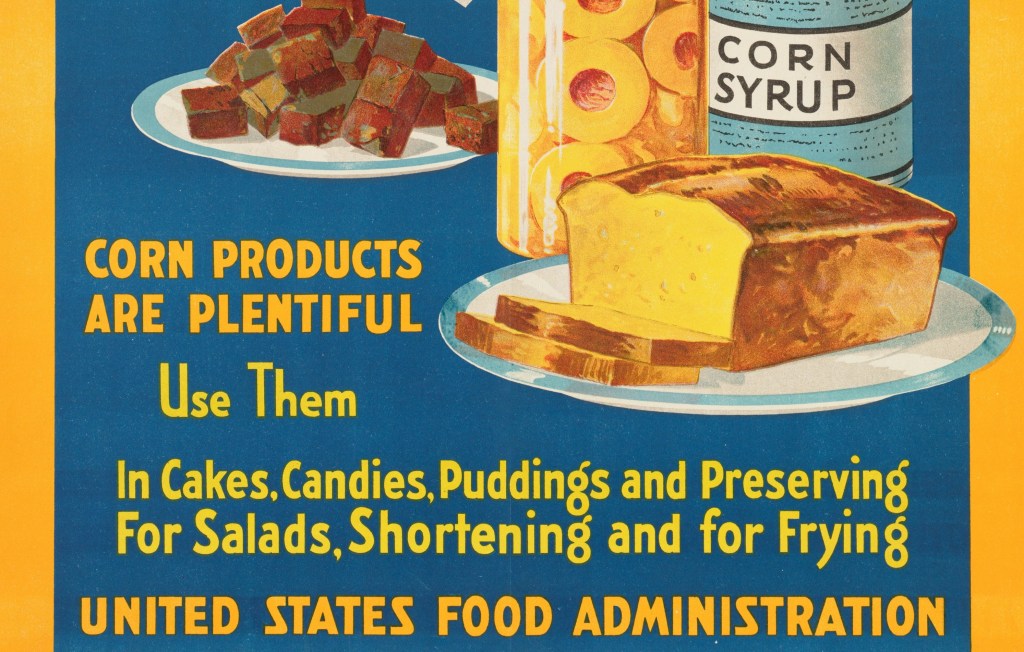
For example, by providing billions of dollars in crop insurance subsidies to corn, wheat, and soy farmers while offering far less funding for other crops, the government helps shape the relative costs that Americans experience in supermarkets and restaurants. Products derived from cereal crops, like grain-fed meat and dairy, ultra-processed foods made from corn, wheat, and soy derivatives, drinks sweetened with high-fructose corn syrup, and refined carbs like white bread, are abundant and cheap due to these subsidies. Healthier products—like most whole fruits, vegetables, beans, and nuts, as well as meat and dairy from animals fed their natural diets—are relatively more expensive. This market intervention by the government plays a massive role in shaping the foods Americans choose to eat.
Likewise, by permitting companies to self-regulate the additives they use in food through the Generally Recognized as Safe (GRAS) loophole of the Food Additives Amendment of 1958, the FDA helps create an incentive structure where companies benefit financially from using unhealthy but cost-saving additives and face little risk or downside from those additives affecting American consumers over time. Since most Americans don’t even know about the additives that end up in their food, can this component really be considered a matter of personal choice and responsibility?
Furthermore, through shortcomings such as conflicts of interest in the drafting of the Dietary Guidelines and nutrition labels that are ineffective at conveying the healthfulness of food, the FDA and USDA miss out on opportunities to improve the information available to consumers—a form of government intervention that does not infringe on individual sovereignty in any way. Simply improving Dietary Guidelines drafting practices and nutrition label design could lead to better outcomes without even changing the role of government in providing consumers with nutrition information.
If our food system was truly independent from government policy, and the only way government could improve public nutrition was to increase its influence on people’s diets, then perhaps the non-interventionist argument would hold water. But given that government policy already shapes the foods we eat in substantial ways, and that current policies are allowing the chronic disease epidemic to fester, I believe our leaders have a duty to reform these policies for the sake of public health.
Do you agree? Let me know your thoughts.
References:
Food Additives Amendment of 1958, 21 U.S.C. § 321(s) (2018).
 I'll Have What They're Having
Leave a comment